
You’re trying to give your dog a pill, or maybe you’re just snacking on a slice of cheddar, and your pup is looking at you with pure desperation. You might be wondering: Can dogs eat cheese?
Yes, dogs can eat cheese.
In fact, cheese is a favorite high-value treat for trainers and dog owners worldwide. It is rich in protein, calcium, and vitamins.
However, there is a catch. Many dogs are lactose intolerant, and some types of cheese (like blue cheese) can be dangerous.
Here is your complete guide to sharing this savory snack safely.
Is Cheese Good for Dogs? (The Benefits)
Yes, cheese contains nutrients that are beneficial for your dog. It is arguably the most popular “high-value treat” used by professional trainers because dogs go crazy for the smell and taste.
According to the American Kennel Club, cheese is a safe treat.
Here are the main benefits:
- Protein: Essential for muscle growth and repair.
- Calcium: Vital for strong bones and teeth, similar to Eggs.
- Vitamin A & B-Complex: Good for eyesight and metabolism.
- Essential Fatty Acids: Great for skin and coat health.
However, cheese is also high in fat and calories, so it should be given in small quantities.
The Lactose Problem (Must Read)
When asking can dogs eat cheese, you need to know this: Most dogs are lactose intolerant.
Unlike humans, dogs do not produce enough lactase, the enzyme needed to break down lactose (milk sugar). Feeding too much cheese can lead to:
- Gas and bloating.
- Diarrhea.
- Vomiting.
Pro Tip: Aged cheeses (like Cheddar or Parmesan) contain much less lactose than soft cheeses, making them safer for doggy tummies.
Which Cheeses are Safe? (The Green List)
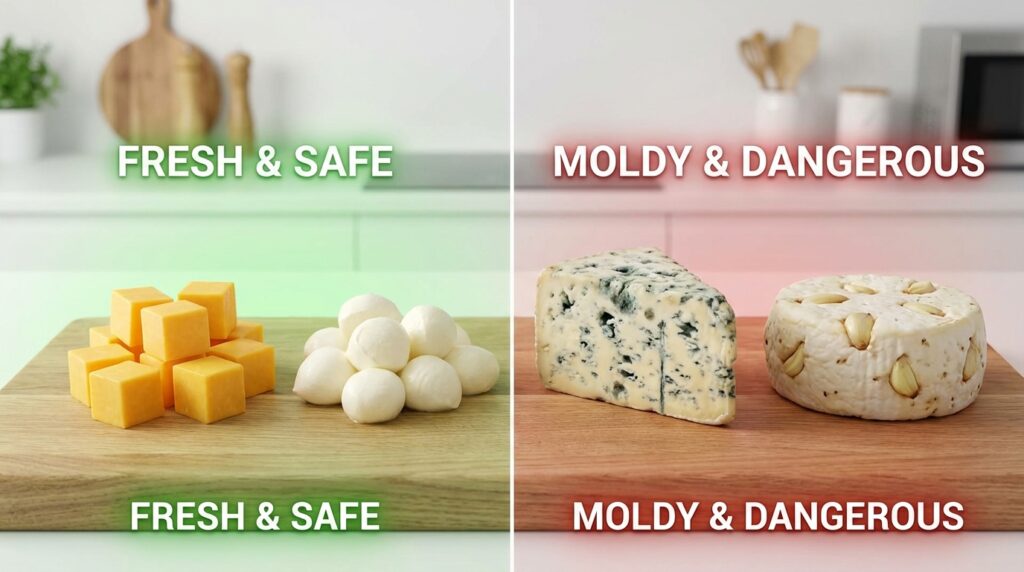
Not all cheese is created equal. Here are the best options to share:
- Cheddar: Low in lactose and easy to digest.
- Mozzarella: Low in salt and fat compared to others (String cheese is okay, but watch the packaging!).
- Cottage Cheese: The MVP! It is high in protein, low in fat, and often recommended by vets for dogs with upset stomachs (bland diet).
- Swiss Cheese: Another low-lactose option.
Which Cheeses are Toxic? (The Red List)
Some cheeses can send your dog to the emergency room. Avoid these at all costs:
- Blue Cheese (Roquefort/Stilton): ☠️ TOXIC. The mold used to make blue cheese produces a substance called Roquefortine C, which dogs are highly sensitive to. It can cause seizures and high fever.
- Garlic & Herb Cheese: As we mentioned in our Bread Guide, garlic and onions are toxic to dogs.
- Brie & Feta: These are incredibly high in fat. Even a small amount can trigger pancreatitis (a painful inflammation of the pancreas).
Using Cheese to Hide Pills
This is the oldest trick in the book! If your dog refuses to take medication, hiding the pill inside a small cube of cheese is a great strategy.
Just make sure to use just enough cheese to cover the pill, and don’t overdo it if the medication needs to be taken daily.
Nutritional Snapshot
Here is what a standard 1-ounce cube of Cheddar cheese contains:
| Nutrient | Amount (Approx) |
| Calories | 115 kcal |
| Protein | 7g |
| Fat | 9g |
| Calcium | 200mg |
Frequently Asked Questions
Can dogs eat cream cheese?
It is not toxic, but it is not recommended. Cream cheese is very high in fat and lactose, which is a recipe for diarrhea.
Can dogs eat mac and cheese?
No. Boxed mac and cheese is processed and loaded with salt, preservatives, and dairy. It’s better to stick to plain cheese.
Is goat cheese safe?
Yes, goat cheese can be a good alternative as it has less lactose than cow’s milk cheese. However, it is still high in fat.
So, can dogs eat cheese safely? Yes, if you follow these rules.
Final Verdict: Can Dogs Eat Cheese?
Yes, but choose wisely.
Cheese is a delicious treat when used for training or hiding pills. Stick to Cheddar or Cottage Cheese, avoid Blue Cheese, and always watch for signs of lactose intolerance.
So, the answer to “can dogs eat cheese” is yes, but moderation is key!
Does your dog come running when they hear the cheese wrapper? Let us know in the comments below!
So, the answer to can dogs eat cheese is yes, as long as it is low in lactose.